Book your fall trip today and save $200 on any charter.
Book Now & Save No thanks, maybe later
The waters off Myrtle Beach are home to some of the most exciting saltwater game fish on the East Coast. From inshore favorites like red drum and spotted seatrout to offshore giants like mahi-mahi, tuna, and sailfish, South Carolina offers incredible year-round fishing opportunities for anglers of all skill levels.
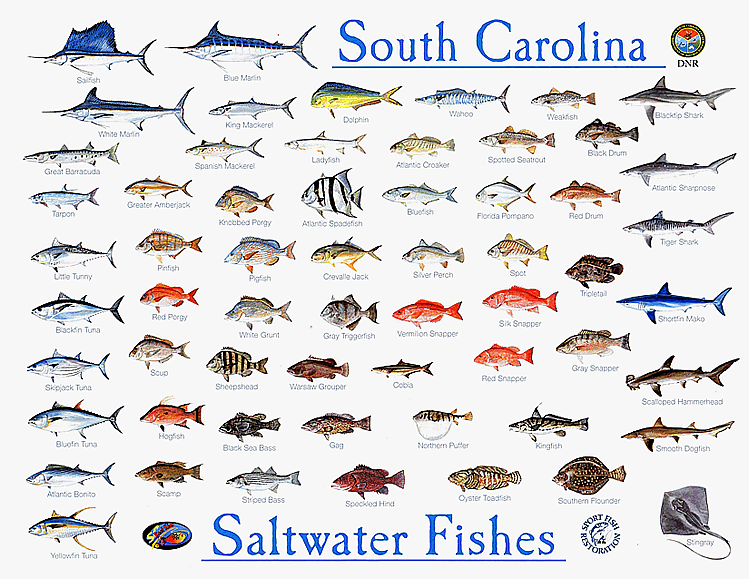
At Myrtle Beach Sport Fishing, we target a wide variety of saltwater species found throughout the Grand Strand, nearshore reefs, wrecks, and Gulf Stream waters. The following fish species are commonly found in South Carolina waters, according to the South Carolina Department of Natural Resources (SCDNR).
Fast-moving schooling fish commonly targeted near beaches, reefs, and bait schools during warmer months.
One of the premier trolling species along the South Carolina coast, especially during spring and fall migrations.
Cobia are highly sought-after migratory fish known for powerful runs and incredible table fare.
A favorite bottom fishing species commonly found on reefs and offshore wrecks.
Atlantic spadefish are popular summertime reef fish known for hard fights and excellent eating.
Aggressive predators frequently caught near bait schools, piers, and nearshore waters.
Greater amberjack are powerful reef fish targeted on offshore structures and artificial reefs.
Gray triggerfish are popular reef species known for excellent flavor and strong fights on light tackle.
One of the most colorful and exciting offshore fish species found in Gulf Stream waters off Myrtle Beach.
Powerful pelagic predators targeted during offshore trolling trips.
Smaller than yellowfin but extremely fast and aggressive, blackfin tuna are common in warmer offshore waters.
Known for blistering speed and razor-sharp teeth, wahoo are one of the most prized offshore game fish in South Carolina.
Sailfish are one of the fastest fish in the ocean and an unforgettable catch for offshore anglers.
Legendary big game fish occasionally encountered in deep offshore waters of the Atlantic.
South Carolina offshore waters hold several snapper species including red snapper, vermilion snapper, gray snapper, and silk snapper.
Popular grouper species include gag grouper, scamp grouper, red grouper, and snowy grouper.
A powerful coastal shark species commonly targeted during shark fishing charters.
Frequently found in nearshore waters and popular for light tackle action.
Scalloped hammerheads are occasionally encountered offshore during warmer months.
Large apex predators occasionally found off the South Carolina coast.
One of the fastest sharks in the ocean and a prized offshore catch.
Fishing in Myrtle Beach changes throughout the year, giving anglers opportunities to target different species each season. Spring and fall bring excellent king mackerel and cobia fishing, summer offers prime mahi-mahi and tuna action offshore, while redfish, trout, flounder, and black drum can be targeted inshore throughout much of the year.
The South Carolina coast supports hundreds of marine species, making the Grand Strand one of the top fishing destinations on the East Coast.
Every species below is one we actually target out of Murrells Inlet, listed from the jetties out to the Gulf Stream. For each one: how far out we run, the depth, the months it peaks, and which charter puts you on it. The same data drives our What’s Biting map.
Where: Jetties & Nearshore, 0-3 miles out, 10-30 ft deep. When: Year-round; Bull Reds peak in fall – peak months September to June. Trip: 4-Hour Reef & Wreck Charter. Keeper and sport fish.
Bull reds patrol the jetties and nearshore bars. A Murrells Inlet classic with big shoulders and bigger pulls. Look for them around the jetties at Huntington Beach State Park.
Where: Jetties & Nearshore, 0-5 miles out, 10-30 ft deep. When: Fall through spring – peak months October to February. Trip: 4-Hour Reef & Wreck Charter. Keeper.
Cousin to the red drum, black drum patrol the same jetties and creeks. The bigger ones are drum-roll-worthy fighters. They share habitat with reds so you can often catch both on the same trip.
Where: Jetties & Nearshore, 0-5 miles out, 10-40 ft deep. When: Winter through early spring; peak Feb-Mar – peak months November to March. Trip: 4-Hour Reef & Wreck Charter. Keeper.
The convict fish. Sheepshead stack up on the jetties, dock pilings and nearshore structure in winter and early spring, stealing bait with their human-like teeth. Tricky to hook but worth every effort.
Where: Jetties & Nearshore, 0-3 miles out, 10-40 ft deep. When: April through September; strong fall run – peak months May to September. Trip: 4-Hour Reef & Wreck Charter. Keeper.
Flatfish that ambush bait near the bottom around jetties, oyster bars, and creek mouths. One of the best-eating fish in the inlet and a family favorite.
Where: Jetties & Nearshore, 0-3 miles out, 5-25 ft deep. When: Spring and fall peak; good year-round – peak months April to May, September to October. Trip: 4-Hour Reef & Wreck Charter. Keeper.
Spotted seatrout are one of the most targeted inshore species in the Grand Strand. They love grass flats, creek edges, and shallow bays. Light tackle fishing at its finest.
Where: Jetties & Nearshore, 0-5 miles out, 5-20 ft deep. When: Spring and fall runs – peak months April to May, October. Trip: 4-Hour Reef & Wreck Charter. Keeper.
Florida pompano are one of the most prized eating fish on the East Coast. They run the beaches and nearshore surf in spring and fall, hitting sand fleas and small jigs. Fast, fun, and fantastic on the table.
Where: Jetties & Nearshore, 1-8 miles out, 15-40 ft deep. When: April through September – peak months April to September. Trip: 4-Hour Reef & Wreck Charter. Keeper.
Quick, scrappy, and great eating. Schools push bait along the beaches all summer. Trolling silver spoons along the nearshore reefs is the classic approach.
Where: Jetties & Nearshore, 3-10 miles out, 20-50 ft deep. When: Spring through fall – peak months March to September. Trip: Shark Fishing Day Charter. Sport fish.
Hard-pulling sharks just off the beach. Fast action and big bends on our shortest runs out of the inlet. Blacktips are acrobatic fighters that often leap clear of the water; most are released.
Where: Nearshore Reefs, 5-15 miles out, 20-60 ft deep. When: May through November; fall blitz – peak months May to September. Trip: 4-Hour Reef & Wreck Charter. Sport fish.
Locally called bonito, little tunny are speed demons that bust bait on the surface in large schools. They hit fast-moving lures and put up a disproportionate fight for their size. A light-tackle sport and live-bait favorite.
Where: Nearshore Reefs, 10-20 miles out, 30-60 ft deep. When: May through September – peak months May to August. Trip: 4-Hour Reef & Wreck Charter. Keeper.
Schools of striped scrappers stacked over the nearshore reefs. They hit small jellyfish imitations and clam strips. Light tackle fun all summer and surprisingly good eating.
Where: Nearshore Reefs, 10-20 miles out, 30-80 ft deep. When: June through August; SC harvest closed in May – peak months June to July. Trip: 6- and 8-Hour Offshore Day Charters. Keeper and sport fish.
Curious bruisers that hang on wrecks, buoys, and nearshore structure. Cobia are sight-fished on the surface and will eat almost anything presented to them. One of the best fights and best dinners in the ocean. Note: SC harvest is closed May 1-31 during the spawning run, so it is catch-and-release that month.
Where: Nearshore Reefs, 10-20 miles out, 40-90 ft deep. When: Spring and fall runs; summer present – peak months April to September. Trip: 6- and 8-Hour Offshore Day Charters. Keeper and sport fish.
Smokers that scream drag on light tackle, prowling the nearshore reefs and live bottom. Kings can top 50 lbs and are one of the most exciting fish to catch. Trolling live baits is the classic approach.
Where: Wrecks & Reefs, 25-30 miles out, 60-100 ft deep. When: May through September – peak months May to August. Trip: 6- and 8-Hour Offshore Day Charters. Sport fish.
Toothy ambush predators lurking over the wrecks. Barracuda hit anything shiny at full speed and make blistering runs. Mostly catch and release (a ciguatera caution applies to large fish), and always a crowd-pleaser.
Where: Wrecks & Reefs, 25-35 miles out, 70-110 ft deep. When: Year-round; harvest closed each April (spawning) – peak months March, May to September. Trip: 6- and 8-Hour Offshore Day Charters. Keeper.
Reef donkeys. Pure muscle over the wrecks. Amberjack are the hardest-fighting bottom fish in the Atlantic and they know it. Bring your back and a heavy rod. Harvest is closed April 1-30 each year for the spawning season.
Where: 50-Mile Range, 30-40 miles out, 60-120 ft deep. When: Year-round; best fall through spring – peak months November to February. Trip: 4-Hour Reef & Wreck Charter. Keeper.
The dependable workhorse of the bottom box. Black sea bass are aggressive, abundant, and excellent eating. They stack up thick on any hard structure and are a great target for newer offshore anglers.
Where: 50-Mile Range, 40-50 miles out, 80-150 ft deep. When: Keeper only May-June; released the rest of the year – peak months May to June. Trip: 10-Hour Continental Shelf Charter. Keeper.
Pinkies mixed in with the snapper on the live bottom. A beautiful fish in the box and excellent eating. Note: this is an overfished stock, so recreational harvest is open only May 1-June 30 and released the rest of the year.
Where: 50-Mile Range, 40-50 miles out, 80-150 ft deep. When: Open ~May through fall; closed Jan-Apr – peak months May to September. Trip: 10-Hour Continental Shelf Charter. Keeper.
Bigger grouper live on the live bottom out past the crowds, where the pressure is light and the fish get old. Gag grouper are the most common grouper out here and are prized table fare. Harvest is closed Jan 1-Apr 30 for the shallow-water grouper spawning closure.
Where: 50-Mile Range, 30-50 miles out, 70-180 ft deep. When: Spring through fall; good year-round – peak months March to September. Trip: 10-Hour Continental Shelf Charter. Keeper.
Beeliners stack up thick out here. Steady action and a cooler full of some of the best eating around. Vermilion snapper are a staple of the bottom-fishing trips.
Where: Continental Shelf, 50-60 miles out, 80-180 ft deep. When: Spring through summer; good year-round – peak months March to September. Trip: 10-Hour Continental Shelf Charter. Keeper.
Tough mouths, sneaky bites, unbeatable on the table. Triggerfish are notorious bait stealers but once you figure out their tricks, they are one of the best-eating fish we bring back.
Where: Continental Shelf, 55-65 miles out, 90-180 ft deep. When: Release only – federal harvest currently closed – peak months May to August. Trip: 10-Hour Continental Shelf Charter. Catch and release.
Big American reds on the shelf-edge live bottom and one of the most sought-after fish on the East Coast. Federal recreational harvest in the South Atlantic is currently closed, so these are catch-and-release right now – always check the current season before keeping one.
Where: Continental Shelf, 50-65 miles out, Shelf edge / blue water deep. When: Year-round; often best fall through spring – peak months October to March. Trip: 12-Hour Gulf Stream Trolling Charter. Keeper and sport fish.
The fastest thing in the spread. Wahoo prowl the shelf-break ledges and the Gulf Stream edge. They can hit 60 mph and the first run will make your reel sing. They are also one of the best-eating fish in the ocean.
Where: Continental Shelf, 60-65 miles out, 130-250 ft deep. When: Open ~May through fall; closed Jan-Apr – peak months May to September. Trip: 10-Hour Continental Shelf Charter. Keeper.
Where the shelf starts to fall away, the quality goes up. Scamp are the prize of the bottom box – deeper, harder to reach, and worth every mile of the run. Harvest is closed Jan 1-Apr 30 (shallow-water grouper closure).
Where: The Deep Drops, 60-70 miles out, 400-700 ft deep. When: Open May through August; closed Jan-Apr – peak months May to August. Trip: 10-Hour Gulf Stream Deep Drop Charter. Keeper.
The shallowest of the deep-drop tilefish and just as delicious. Blueline tilefish fill the box with sweet, firm white meat and are a great addition to any deep-drop spread.
Where: The Deep Drops, 65-72 miles out, 400-700 ft deep. When: Brief spring opening (~May); released the rest of the year – peak months May. Trip: 10-Hour Gulf Stream Deep Drop Charter. Keeper.
Electric reels and baits dropped into the dark down the continental slope. Arguably the best-eating fish we catch, with incredible white, sweet flesh. Harvest is limited to a short spring window each year, so it is released outside it.
Where: The Deep Drops, 68-75 miles out, 600-900 ft deep. When: Winter harvest window (Jan-Mar); released the rest of the year – peak months January to March. Trip: 10-Hour Gulf Stream Deep Drop Charter. Keeper.
Sweet, crab-fed white meat from the deep mud. Golden tilefish live in burrows on the soft bottom at the base of the continental slope. One of the most unique trips we offer; the harvest window runs roughly January-March.
Where: The Gulf Stream, 70-100 miles out, Blue water deep. When: Spring and fall; present much of the year – peak months May to September. Trip: 12-Hour Gulf Stream Trolling Charter. Keeper.
Footballs of muscle busting bait at the break and beyond. Blackfin tuna are sashimi-grade and strong beyond their size. Often the inshore-most of the tunas, found mixed with mahi at the weed lines.
Where: The Gulf Stream, 70-100 miles out, Blue water deep. When: May through September – peak months May to August. Trip: 12-Hour Gulf Stream Trolling Charter. Keeper and sport fish.
Neon green and gold acrobats around the weed lines. Fast, furious, and fantastic on the grill. Mahi are the most popular offshore fish we target and they rarely disappoint; in summer they are caught closer in on grass and debris.
Where: The Gulf Stream, 70-100 miles out, Blue water deep. When: May through October; spring and fall runs – peak months May to September. Trip: 12-Hour Gulf Stream Trolling Charter. Keeper.
Sashimi-grade footballs of muscle. Yellowfin tuna are one of the most prized catches in the Gulf Stream. They average 45 lbs by late summer and fight like nothing else on the water.
Where: The Gulf Stream, 70-100 miles out, Blue water deep. When: June through September; winter run possible – peak months June to August. Trip: 12-Hour Gulf Stream Trolling Charter. Catch and release.
Lit up and tail-walking behind the boat. Pure Gulf Stream magic. Sailfish are the most commonly caught billfish in these waters and are always released to fight another day.
Where: The Gulf Stream, 70-100 miles out, Blue water deep. When: June through August – peak months June to July. Trip: 12-Hour Gulf Stream Trolling Charter. Catch and release.
Smaller and more acrobatic than blues, white marlin are a spectacular catch on lighter tackle. One of the most acrobatic billfish in the Atlantic and always released.
Where: The Gulf Stream, 70-100 miles out, Blue water deep. When: June through September – peak months June to August. Trip: 12-Hour Gulf Stream Trolling Charter. Catch and release.
The fish of a lifetime. We pull trolling spreads where the warm blue water of the Gulf Stream runs offshore. Blue marlin are the pinnacle of big game fishing, a bucket-list catch, and released.
Not sure which trip fits the fish you want? Call (843) 231-5453 – we answer 8am to 8pm every day – or check live availability.
Whether you want to target trophy offshore pelagics, reef fish, sharks, or family-friendly inshore species, Myrtle Beach Sport Fishing offers unforgettable fishing adventures along the South Carolina coast. Our experienced captains fish the waters off Myrtle Beach year-round and know where to find the best seasonal action for every trip.