One of the biggest misconceptions about fishing charters is that you need years of experience, incredible upper-body strength, or advanced fishing skills to catch fish.
The reality is much different.
Every year, thousands of first-time anglers board charter boats in Murrells Inlet, South Carolina, and successfully catch fish. Children catch fish. Grandparents catch fish. Vacationers who have never touched a fishing rod catch fish.
That doesn’t mean every fish is easy to reel in.
Depending on the species, the size of the fish, and the fishing conditions, reeling in a fish can range from a simple and enjoyable experience to one of the most exciting physical challenges you’ll ever face.
At Myrtle Beach Sport Fishing, one of the most common questions we hear from guests before a trip is:
“How hard is it to reel in a fish?”
The answer depends on what bites your line.
Let’s take a closer look at what you can expect when fishing in the productive waters off Murrells Inlet and Myrtle Beach.
The Good News: You Don’t Need Fishing Experience
Many first-time anglers worry they’ll hold up the group or won’t know what to do if they hook a fish.
That’s exactly why charter captains and crews are there.
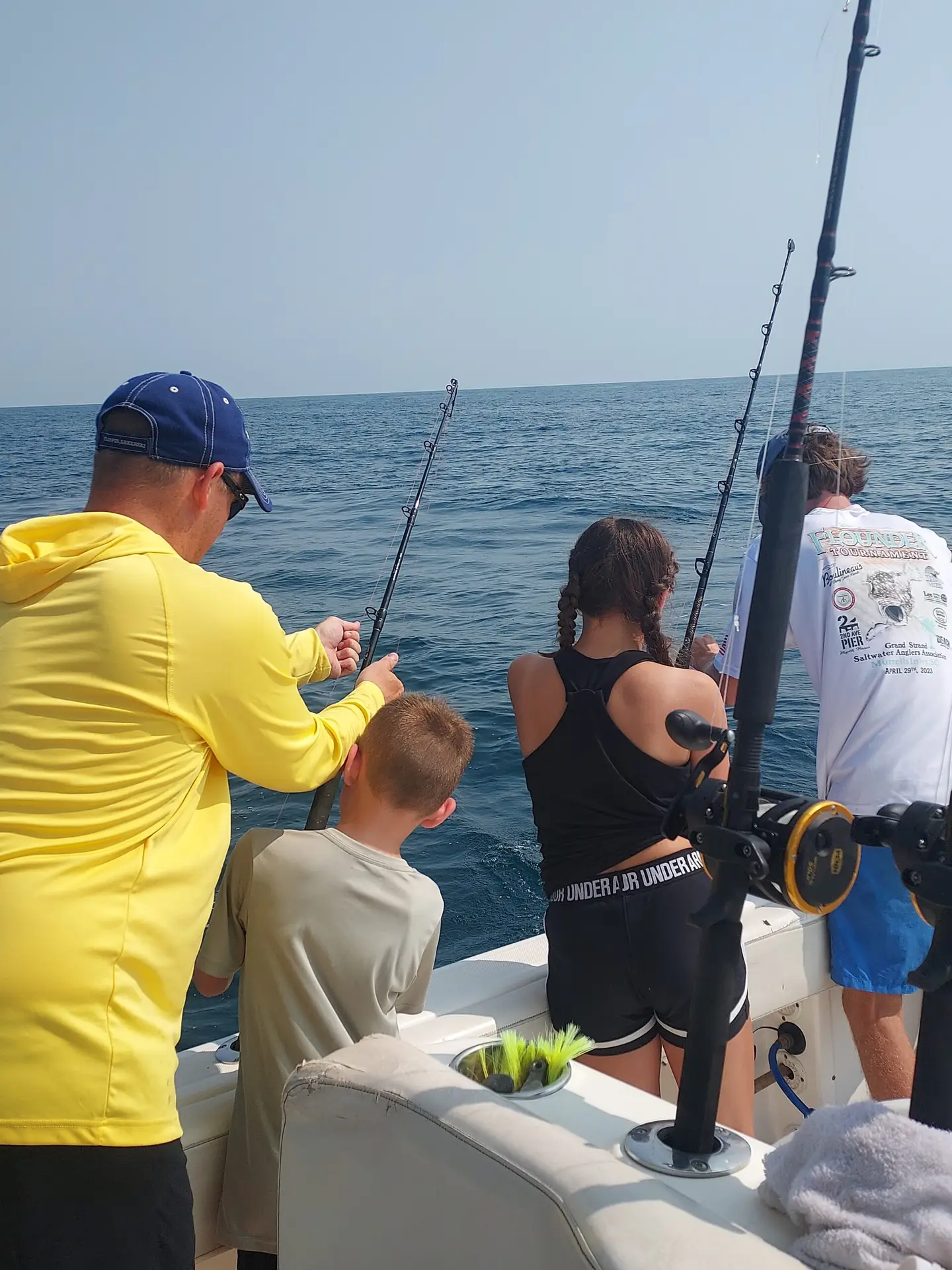
When you fish with Myrtle Beach Sport Fishing, we’ll show you:
- How to hold the rod
- How to use the reel
- How to fight a fish
- When to reel
- When to let the fish run
- How to safely bring your catch to the boat
Most guests learn the basics within minutes.
In fact, many people are surprised by how quickly they become comfortable once the action starts.
Not All Fish Fight the Same
One of the things that makes fishing so exciting is that every species behaves differently.
Some fish make short, powerful runs.
Others dive deep.
Some shake their heads aggressively.
Others use their weight to make the fight feel harder than expected.
Let’s break down the difficulty level of some of the most popular fish species caught during Murrells Inlet fishing charters.
Beginner-Friendly Fish
Black Sea Bass
Difficulty Level: Easy
Black sea bass are among the most common fish caught during bottom fishing trips.
They’re excellent for:
- Families
- Children
- First-time anglers
- Casual vacation fishermen
Most black sea bass provide enough resistance to make the experience fun without being physically demanding.
Many guests catch multiple sea bass during a single trip.
Spanish Mackerel
Difficulty Level: Easy to Moderate
Spanish mackerel are fast and aggressive.
While they aren’t usually large fish, they provide exciting action because of their speed.
They’re a fantastic introduction to saltwater fishing and are often a favorite among families visiting Murrells Inlet.
Flounder
Difficulty Level: Easy
Flounder fishing is often more about detecting the bite than fighting the fish.
Once hooked, most flounder are relatively manageable for anglers of all skill levels.
Moderate Difficulty Fish
Redfish
Difficulty Level: Moderate
Redfish are famous for their powerful runs and determination.
A medium-sized redfish can provide a memorable battle without overwhelming most anglers.
This makes them one of the most popular sport fish along the South Carolina coast.
Sheepshead
Difficulty Level: Moderate
The challenge with sheepshead often comes before the fight.
They’re known for stealing bait and making anglers work for every hook-up.
Once hooked, they pull hard and provide a satisfying battle.
King Mackerel
Difficulty Level: Moderate to Challenging
King mackerel are one of the most exciting fish caught off Myrtle Beach.
When hooked, kingfish often:
- Make long runs
- Move quickly
- Change direction suddenly
The fight can be intense, but most anglers can successfully land them with guidance from the crew.
Challenging Fish That Get Your Heart Racing
Cobia
Difficulty Level: Challenging
Cobia are among the most sought-after fish in Murrells Inlet.
One reason they’re so popular is because they fight hard.
A large cobia can:
- Make powerful runs
- Circle beneath the boat
- Change directions repeatedly
- Test an angler’s endurance
The final moments near the boat are often the most exciting.
Many anglers describe landing their first cobia as one of their favorite fishing memories.
Grouper
Difficulty Level: Challenging
Grouper are incredibly strong fish.
Once hooked, their goal is simple:
Get back to structure.
This often creates a powerful tug-of-war between the fish and the angler.
Many guests are surprised by how much strength grouper possess.
Large Red Snapper
Difficulty Level: Challenging
Depending on the season and regulations, larger snapper can provide a surprisingly difficult fight.
The deeper the water, the more work it often takes to bring the fish to the surface.
The Heavyweights of Offshore Fishing
Amberjack
Difficulty Level: Very Difficult
If you’ve ever heard someone talk about a fish that “felt like pulling a truck off the bottom,” they may have been describing an amberjack.
These fish are often called “reef donkeys” for a reason.
Amberjack are:
- Extremely powerful
- Relentless fighters
- Physically demanding
Even experienced anglers frequently need breaks while fighting larger amberjack.
For many guests, landing an amberjack becomes the highlight of their entire Myrtle Beach vacation.
Mahi-Mahi
Difficulty Level: Moderate to Challenging
Mahi-mahi aren’t necessarily the strongest fish in the ocean, but they make up for it with speed and athleticism.
They’re known for:
- Acrobatic jumps
- Fast runs
- Colorful displays
- Unpredictable movement
The excitement level is extremely high, making them one of the most memorable fish to catch.
Does Size Matter?
Absolutely.
A small fish may take only seconds to reel in.
A larger fish of the same species can create a battle lasting several minutes or longer.
Factors affecting difficulty include:
- Fish size
- Species
- Water depth
- Current conditions
- Equipment used
The deeper the fish, the more effort is often required.
What Happens When You Hook a Big Fish?
This is where the real excitement begins.
When a larger fish bites:
Step 1: The Rod Bends
You’ll immediately feel resistance.
The rod may bend dramatically.
Step 2: The Fish Runs
Many species make strong initial runs.
This is normal.
The fish is trying to escape.
Step 3: The Crew Helps Guide You
Our crew will coach you through the process.
You’ll hear instructions like:
- “Keep the rod tip up.”
- “Reel when you can.”
- “Let the drag work.”
- “You’re doing great.”
Step 4: The Final Battle
As the fish nears the boat, it often makes one last effort to escape.
These final moments are often the most exciting part of the fight.
Can Kids Catch Fish on a Charter?
Absolutely.
In fact, some of the biggest smiles we see belong to young anglers.
Many species caught around Murrells Inlet are perfect for:
- Children
- Teenagers
- First-time fishermen
The crew can help adjust techniques and provide assistance when necessary.
Fishing charters remain one of the most family-friendly activities available during a Myrtle Beach vacation.
Can Older Adults Enjoy Charter Fishing?
Yes.
Many guests assume fishing charters are physically demanding for everyone.
In reality, many trips can be enjoyed comfortably by older adults.
Certain species and fishing styles require more effort than others, but charter captains can often tailor experiences based on the group’s preferences and abilities.
You Don’t Have to Be an Athlete
Another common misconception is that charter fishing requires exceptional strength.
The truth is:
Modern fishing equipment does much of the work.
Quality rods, reels, and properly adjusted drag systems help anglers successfully land fish without relying solely on strength.
Technique often matters more than muscle.
The Most Rewarding Part Isn’t Always the Fight
While battling a large fish is exciting, many guests remember other moments just as vividly:
- Seeing dolphins nearby
- Watching a child catch their first fish
- Spotting marine wildlife
- Sharing laughs with friends and family
- Experiencing the beauty of South Carolina’s coastline
Fishing charters offer much more than simply catching fish.
They’re about creating memories.
Every Fish Feels Like an Accomplishment
One of the reasons fishing remains so popular is that every catch feels earned.
Whether you’re reeling in a black sea bass for dinner or battling a powerful cobia offshore, the excitement is real.
At Myrtle Beach Sport Fishing, we’ve helped countless first-time anglers catch fish they never imagined possible.
The best part?
Most guests discover that fishing is much easier—and much more fun—than they expected.
Book Your Murrells Inlet Fishing Adventure
If you’ve been wondering whether you can handle reeling in a fish on a charter, the answer is almost certainly yes.
From beginner-friendly species to hard-fighting offshore giants, there’s a fishing experience for everyone in Murrells Inlet.
Whether you’re planning a family vacation, a weekend getaway, or your first fishing adventure, Myrtle Beach Sport Fishing provides the guidance, equipment, and local expertise needed to create an unforgettable day on the water.
You don’t need experience.
You don’t need special skills.
You just need to be ready for the excitement that comes when that rod suddenly bends and the fight begins.
Frequently Asked Questions
Is it hard to reel in a fish on a fishing charter?
Most fish are manageable for beginners, especially with guidance from the crew. Some larger species like amberjack, cobia, and grouper can provide more challenging fights.
Can children catch fish on a charter?
Yes. Many species caught near Murrells Inlet are suitable for young anglers, and crews can assist when needed.
What fish are easiest for beginners to catch?
Black sea bass, Spanish mackerel, and flounder are often excellent species for first-time anglers.
What fish fights the hardest in Murrells Inlet?
Amberjack are widely considered among the strongest fish commonly targeted during offshore charters. Large cobia and grouper also provide intense battles.
Do I need to be physically strong to go charter fishing?
No. Modern fishing equipment and proper technique make fishing accessible for people of many ages and fitness levels.
How long does it take to reel in a fish?
It depends on the species, size, and water depth. Some fish can be landed in less than a minute, while larger fish may take several minutes or more.